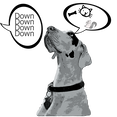
 We were eating dinner the other day. The dogs should be laying down and not bugging us but one seemed to have forgotten what to do. I asked for a down but the dog in question was looking everywhere but at me, all the while “ignoring” the cue. I don't know if she looking for a spot to lie down since all the good spots were taken? Maybe she was focused on the smell of the food or heard a noise outside. I didn’t give her time to follow thru, instead I repeated my request a second and then a third time. That’s when I caught myself and realized I wasn’t giving her what she needed, time to hear, process and follow thru on the cue. This time, after I asked for down, I remembered to count in my head to 15. On 14 she lay down. The tagline is 15 seconds to failure. Why is it so important? If someone says your name while your brain is engaged elsewhere does it take you a moment to process and then respond? She wasn’t ignoring me, she needed that same opportunity: to hear, process and respond. We also reinforce giving her the chance to make good choices. If we keep repeating the cue, often getting louder each time, the dog will either tune you out completely and you become background noise or decide that “down down DOWN” means down and will literally wait for you to say it 3 times each time. 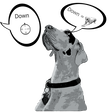 You may even find that you stay calmer and won’t get as frustrated when counting to 15. Glaring at a dog and waiting for them to follow the cue that, like a machine gun burst of shots, repeats “down down down down” doesn’t give a clear direction of what we want. Keep the cue short, say it once and then wait for the dog to process and respond. The dog will be happier and so will you.
1 Comment
 As the song says, "All I'm askin' Is for a little respect".
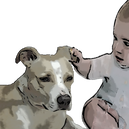
Pet owners often tell me that, in preparation for having a baby, they have started pulling tails and ears in order to get the dog "used to it" before the baby comes. The dog is not 'getting used to it" but is simply tolerating something that is annoying, uncomfortable and may even be painful. It may even increase their anxiety. Tolerance only goes so far, tho, and then a dog may decide enough is enough. If someone was poking you with their finger how long would you tolerate the behavior before finally reacting? You can say "stop" but a dog can only say it thru body language before they eventually resort to biting. If you aren't going to stop your child from pulling the dog's ears then separate them. How does Fido say "enough, I'm not comfortable with this"? You may notice the dog licking you and/or the baby. Yawning. Very round or "whale eye" (where the white is quite visible). Lip licking. Ears pinned back. Tail tucked. Body shifts away. Whining. Lip lifting / showing teeth. Growling. These are all ways the dog is telling you they are not comfortable. What should you NOT do? Punish the dog who is trying to tell you there is a problem. Respect your dog and teaching your child to respect the dog you will help you protect them both. A false sense of security can develop when a baby first comes home. The dog may be curious and even want to be near this new bundle that is taking up so much of your attention. You let your guard down, feeling a sense of relief that Fido appears to be accepting the baby. The baby, tho, is pretty stationary at this point. As months pass and the baby becomes more mobile, as well as more curious about the dog, Fido's anxiety can build. Baby's are unpredictable and some dogs don't handle this as well while some may tolerate for awhile but may eventually say "enough". What SHOULD you do? Institute a very strict supervision and separation plan. Try to keep yourself positioned between the child and the dog, offering treats to the dog. Use stuffed toys to show the child how to pet the dog and make sure you are always there. Teach them to never put their face near a dog's face. Don't leave them alone for a moment as a quick run to another room to get your phone or a soda or that project you were working on could spell disaster, remember dogs and babies are FAST. They only need a moment for something to go wrong. When separating the dog be sure not to make it a punishment. It's a great time for the dog to enjoy a snuffle mat, stuffed Kong, or a favorite toy while in their own space. Hire a reward based or Fear-Free certified trainer who is experienced in behavior challenges, a behaviorist or Veterinary Behaviorist to work with your family and the dog. Talk to the vet and make sure there aren't any physical causes for the dog to be anxious. Even a small tug on an ear or tail or the pat of a hand or a toddler climbing on the dog could be painful for an arthritic dog, prompting the dog to be less tolerant. It's our job to protect both the child AND the dog. The bond between a child and dog can be wonderful but it needs to be safe. 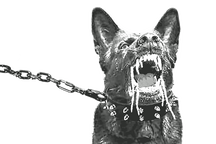 Is your dog reactive to other dogs while on walks? You know what I’m talking about. That sweet, furry love of your life, who turns Cujo-like when he sees certain dogs (or all dogs). You aren't alone, it happens much more often than you realize. When it happens to you, tho, it seems much louder, much worse than when you see another dog react. This is normal because you aren't emotionally invested in someone else's dog but your dog can skewer your heart with this behavior..
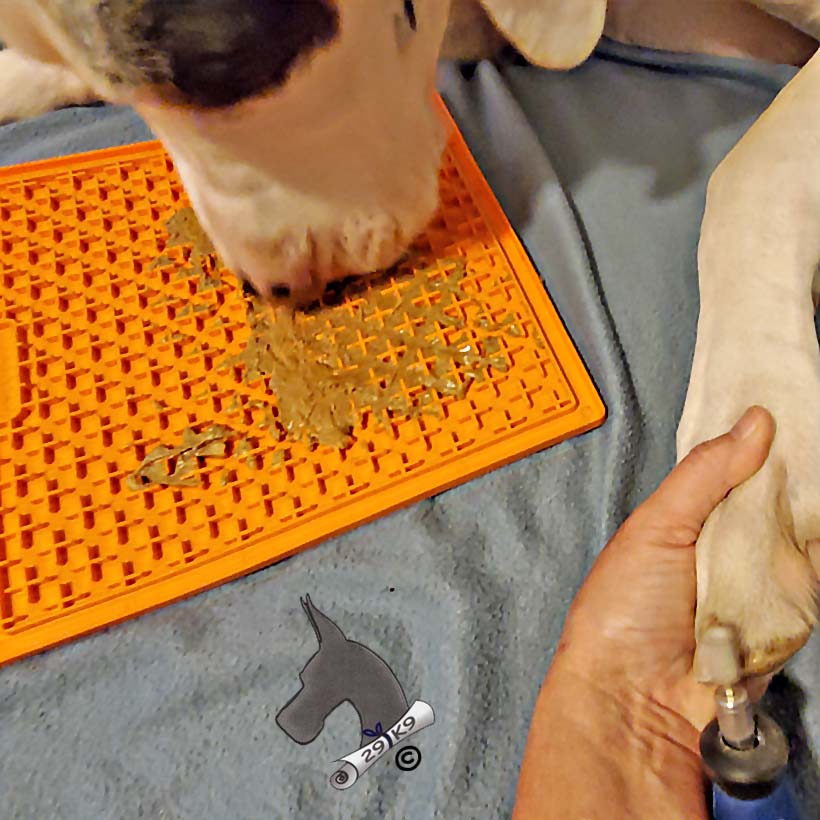
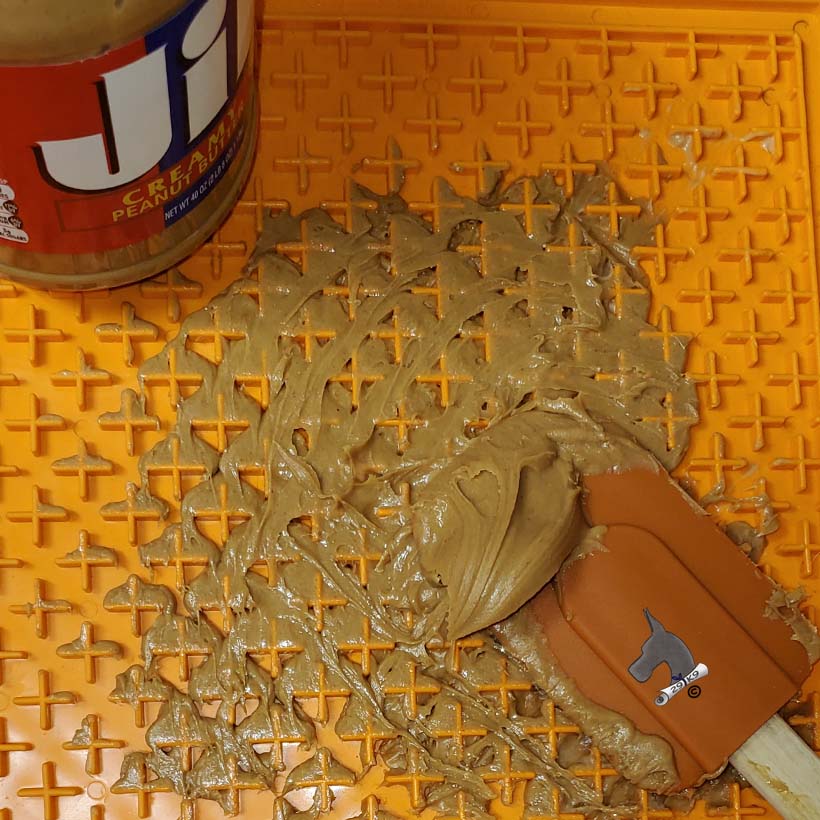
You ARE emotionally invested in your dog and this affects how YOU react to your dog's reaction. Embarrassment, nervousness, fear, shame...these are all normal feelings. That's when we typically begin to yell, cajole, threaten, plead for the dog to behave. "It's no big deal" "STOP IT" "C'mon, you know better than to act like this" "ENOUGH already!" Maybe throw in a prong collar or e-collar for good measure to punish the behavior in hopes that it will fix the situation. Instead, tho, the behavior eventually begins to escalate, getting worse. The first step in addressing the behavior is not punishment or bribery but identifying what the dog is trying to tell you. What they are trying to say is usually either “I’m so excited I don’t know how to control my behavior” or “I’m scared and need some space”. Either way your dog is over threshold which means that learning is not going to happen. Trying to yell or beg or bribe will not affect how the dog will react next time So what is a frazzled handler to do? Take a deep breath, step to the side and say “lets go” while turning around and heading the other direction, increasing distance to that which they were reacting to. Once the dog has calmed down and giving you good attention you reward this behavior. Now it is important to make a plan that avoids these situations until your dog is ready and able to handle them. Contact a professional who is experienced and educated in science based methods to work with you and your dog. One who understands that the research is very clear on how to best address the challenges for best results long term and has the experience to teach you and your dog. No flooding, no forcing, no punishment. Solid behavior help instead. Your average dog trainer is just that, a dog trainer. They aren’t educated or experienced in dealing with behavior issues in the best and most modern ways possible. This isn’t about cookie pushing but in timing rewards so that counter conditioning occurs by changing the emotional response to the stimulus (the other dog). Timing is everything, and must occur at precise moments with a high enough value reward while at the same time preventing over threshold or flooding situations where learning does not happen. If you can’t afford a behaviorist there are also online resources, such as CARE For the Reactive Dog, that can help the dog owner learn skills to address their dog’s challenges. Beware of any trainer promising fast fixes…these fixes typically require use of punishment which may suppress the behavior but does not fix the emotional response. This can lead to even more challenging and dangerous behaviors later because the dog is still reacting but with a new level of fear added on. If a friend tries to help you because something worked with their dog remember that not all dogs are the same. Educated and experienced trainers and behaviorists have spent countless hours learning about animal behavior and how to address these things in the best and safest way possible. While your neighbor or friend may mean well, they haven’t put their heart and soul and wallet into learning the best methods to make your dog better.  With the warmer weather (or on rainy days) your dog may not be getting as many walks or even playing in the yard as much. Adding mental stimulation (also called enrichment) to their day can be a big help in curtailing unwanted (and often destructive) behaviors that can be caused by boredom. A few suggestions: Teaching your dog the "find it" game is an easy one to do. Initially you'll do this while the dog watches from a "wait": toss a few treats on the ground and then say "find it". As the dog gets the point of the game hide a few treats in easy to find spots. Then up the ante and hide the treats in harder to find spots and move the dog out of the room. You can also do this game with a favorite toy. 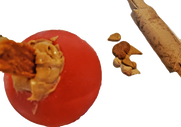 If you have a "stufficidal" dog that can destroy even the toughest of stuffy toys this works great: Use paper towel or toilet paper cardboard inserts. Put a couple of treats in them and then fold the ends. You can also use small boxes or paper bags for this. Lick mats and Kongs are great. We fill them with kibble or treats and then put peanut butter or plain yogurt (be sure it's not sugar free as the sugar substitutes can be dangerous to dogs) and then freeze or chill them (soft drink kosies are great to hold them upright so they don't make a mess in your fridge). This makes the Kong experience last longer. 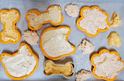 Freezing ice cube trays or cookie cutters filled with mixture of plain yogurt, canned pumpkin, broth, canned dog food, even blueberries in water are great treats in the heat and interesting to the dog. Hide and seek. One person hides and then the other tells the dog to go find. When the dog gets to the person hiding be sure to ask for a sit before rewarding (in this case you are the reward with big praise and attention.) In addition to alleviating the boredom this also helps your dog learn to give wanted behaviors even when excited.  So called "balanced trainers" will often say that trainers must have more than one tool in their toolbox when justifying the use of aversives (prong collars, choke chains, e-collars, squirt bottles...) Science based positive trainers have many tools in their tool box but NONE of these tools hurt or scare. Balanced trainers often jump to the aversive because they think a treat isn't working or "it's faster" but they don't step back and look at the big picture. How does a science based trainer approach differ? We look at the big picture and then break it down and then focus on changing the dog's behavior. Let's take that common unwanted behavior of jumping on people.
1. What is the unwanted behavior: Jumping 2. When does it occur: People coming in the door 3. What is the motivator: Attention 4. What is the wanted behavior: Sit What do we need to do: Manage the environment to prevent the behavior from continuing, teach and motivate the new behavior, teach the human how not ro reinforce the unwanted behavior when reintroducing the dog to the environment. For the jumper we manage the environment by preventing Fido from being in the environment where the jumping occurs. When someone is coming in the door have Fido outside or in another room. Next, we teach the new wanted behavior, sit, until sit is generalized to many situations, locations and with distractions. Before we bring Fido back in we must teach the human that any attention is good attention to a dog and rewards the unwanted behavior. Yelling, waving your arms, pushing Fido away can be a favorite game. Take all of this attention away by turning sideways with your arms crossed and no eye contact. Say "sit" once and then wait for it. It's hard not to repeat the cue but it is important that the dog makes the choice to provide that behavior and it will get faster as they connect the reward to the behavior. In the beginning this takes time so don't try to do this part while you are in a hurry. Jumping has given Fido a lot of attention in the past so he's going to have to work thru it in his brain that jumping no longer nets him any attention. He may even do the sit a few times and then suddenly you may have what is called an "extinction burst". This is when Fido, after doing well, reverts back to that unwanted jumping with a little more gusto in a last ditch attempt to get that jump to reward him with the attention. He is thinking "it worked for a long time, surely it will work again". Now is the time to stand firm. Practice this every day with family members first, then ask friends to work with you. Have treats by the door and tell visitors what you are working on and what you want them to do so that Fido has the best chance at being successful in learning to make the right choices. This is how reward based training works. We identify the challenge, identify the motivator (or reward). We identify the wanted behavior. We manage the unwanted behavior by preventing the situation. We teach the wanted behavior. We ask for the wanted behavior while ignoring the unwanted behavior. This way we avoid punishments that the dog does not understand and, according to repeated studies, reward based training helps set up solid foundations that can prevent long term problems. It allows the dog to learn to make right choices and build self control, creating a life long family member that you enjoy spending time with rather than a dog who is submitting out of fear of the next punishment. 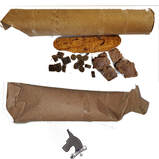 Does your dog like to dig or tear things up? These behaviors can be frustrating and very hard to stop. There is a simple solution, tho, that reduces the frustration for the dog and the human.
Destruction Use enrichments that allow the dog to tear something up. Toss a couple of treats into a cardboard box, a paper towel insert or a paper bag that you then roll up. Yes they will make a mess but iti's an easy one to clean up and may save your furniture. Digging set up a digging area where it is allowed. Motivate the dog to use this area by partially burying some favorite toys and then redirect this area. They will learn to dig there rather than in your garden, along the fence or other areas. Remember, the more mental stimulation they get the less you will see these types of unwanted behaviors.  
|
 |  |